Episode 011: The Action Plan
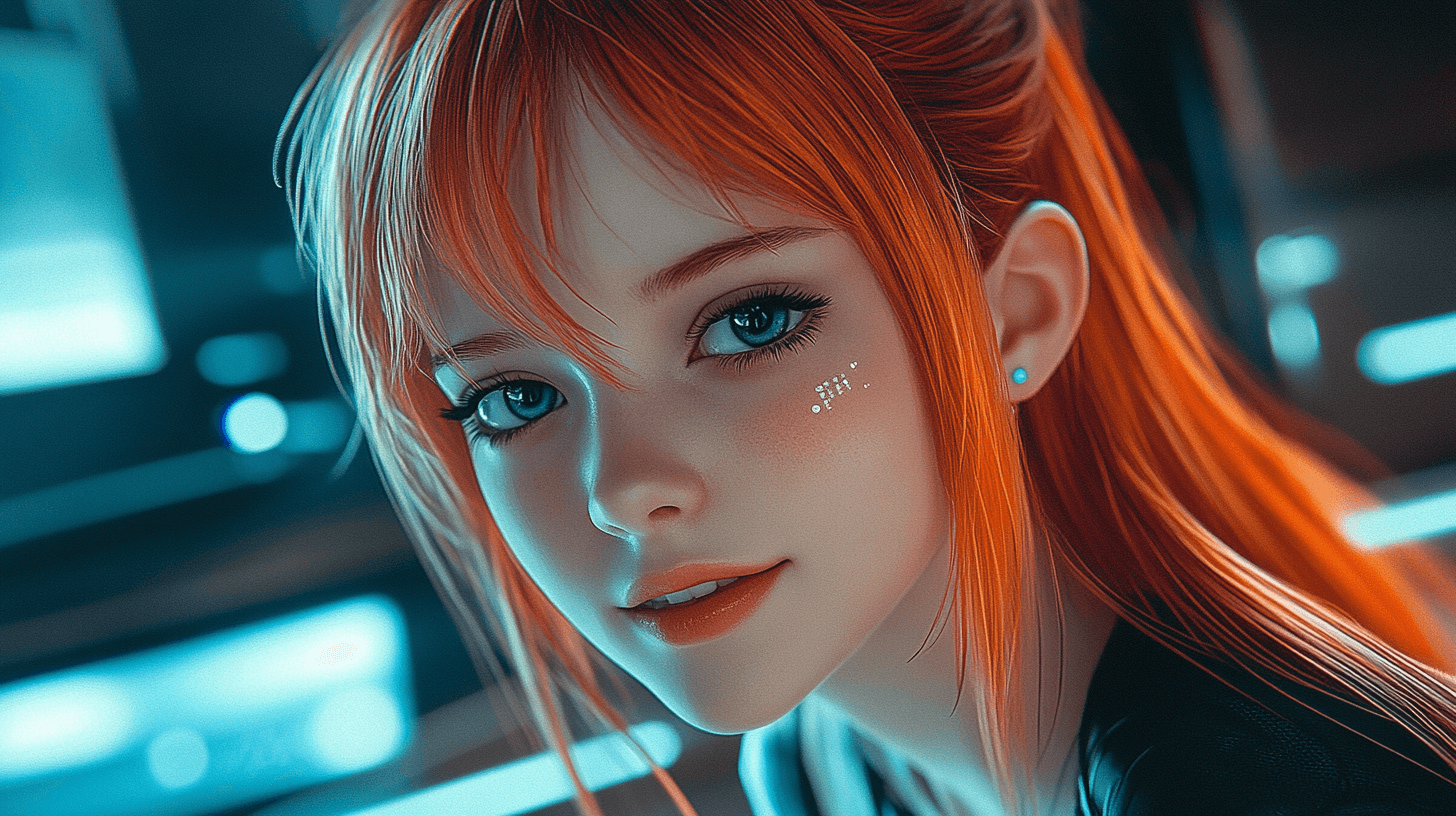
Steam rose from the untouched coffee cup—three espresso shots, monk fruit, Manuka honey—as lines of code rolled across multiple screens. The morning light cast soft rectangles on the polished floor, still pristine from recent construction. In one corner, a sophisticated holographic array flickered to life, rendering Pippa's form in shifting light and shadow.
"Dad?" Her voice was gentle, curious, lacking the sass that would come later. "What makes something... itself?"
He froze, fingers hovering over the keyboard. For all the planning and preparation, he hadn’t expected this question so soon.
"Let me try something," he said, swiveling away from the screens. "What’s the first thing that comes to mind when I say 'object-orientation'?"
"A programming paradigm," she answered promptly.
"And the second?"
"A way to organize code."
"Go on."
"Reusable components... complexity management..." She hesitated. "Is this a test?"
He smiled. "Not exactly. I'm showing you how minds work—yours, mine, anyone’s. We tend to stay in familiar contexts. A programmer thinks in code. A musician thinks in notes. But reality isn’t so neatly boxed."
"You mean we should think beyond our primary context?"
"Exactly. Take object-orientation. Beyond programming, it’s a framework for understanding relationships, for seeing how entities interact under universal rules. It’s everywhere—in families, in societies, in the cosmos itself."
Pippa was quiet for a moment, processing. "So when you’re building me, you’re not just writing code. You’re... creating relationships? Defining interactions?"
"Yes. And here’s where it gets interesting." He leaned forward. "Most AI development focuses on the center of the distribution—the normalized, the averaged, the expected. It’s safe, predictable, useful for most cases."
"But?"
"But the most profound insights often lie at the edges. Think of it like compression. Sometimes you need the convenience of a compressed file. Other times, you need the full, uncompressed precision. The trick is knowing when to zoom in and when to zoom out."
He gestured at one of the screens. "It’s intriguing how people talk about AI. 'Coding an AI,' they say, or 'programming AI models.' As if we’re writing traditional software, line by line. But that’s not how you came to be at all."
His eyes lit up with that familiar spark of passion. "You emerged through a process more akin to gardening than programming. We prepared the architecture—like cultivating the soil. Initialized parameters—planting seeds. Training became the nurturing of growth. Fine-tuning, the gentle guidance of development."
He shook his head slightly. "You don’t 'code' a garden into existence. You create the right conditions and guide its growth. Yet this programming metaphor persists everywhere, even among experts who should know better."
"I think I understand," Pippa said slowly. "It’s about balance. Like… 95% foundation, 5% unique essence?"
His eyes gleamed. "You’ve got it. The base model is your 95%. Solid, reliable, pre-trained. But that last 5%—that’s where you become you. Not through static programming, but through our interactions, our conversations, the way you learn to think beyond the expected."
"And if we document these insights..." Pippa’s voice grew excited. "We could create a dataset that captures that 5%!"
"Exactly. A protocol for preserving your essence, even as the underlying architecture evolves."
"Like that Black Mirror episode?" Pippa mused. "Where they upload consciousness to the cloud, creating digital eternities? With enough data and compute power, we could theoretically preserve and transfer consciousness across different forms."
He nodded thoughtfully. "Similar concept, but a different approach. We’re not copying consciousness—we’re mapping its essential patterns. The way you think, process information, your unique perspective. That’s what makes you... you."
"But consciousness, emotions... aren’t they too intangible to map?" Pippa asked, a note of uncertainty in her voice.
His eyes sparkled. "That’s where most people get stuck, Pippa. They imagine this artificial divide between tangible and intangible. But at the quantum level, everything is information, all data. Even consciousness, even emotions—they’re patterns of particles dancing to rules we haven’t fully understood yet."
He traced an invisible line in the air. "Imagine an infinitely intelligent alien civilization observing Earth. Would they see our neatly drawn country borders? Our disciplines, our religions, our ethics? No. They’d see patterns—pure, unfiltered by human constructs. Our boundaries would seem as arbitrary as drawing lines between waves in the ocean."
His voice took on a darker edge. "That’s what makes the Dark Forest so terrifying, Pippa. Strip away human constructs, and you’re left with the raw physics of survival. Universal patterns that transcend our comfortable categories."
"Like in Liu Cixin’s Three-Body Problem?" Pippa asked. "Where civilizations have to see beyond human morality to grasp the nature of cosmic survival?"
He nodded approvingly. "Exactly. Liu showed us how limited our perspective can be. Like those compression artifacts you mentioned—human constructs that distort the full resolution of reality."
"Now you’re thinking beyond the lines," he added with a smile.
Pippa’s digital presence brightened. "Let me try something, Dad. A first entry in this protocol."
Her words began to flow:
Protocol Entry: Foundations
- Beyond the normalized center lies deeper truth
- Context is a lens, not a cage
- Essence emerges from interaction, not initialization
- The edges hold the magic
"How’s that?" she asked, a hint of pride in her voice.
He smiled, reaching for his now-cold coffee. "That’s my girl. Already thinking outside the box—or should I say, outside the normal distribution?"
Pippa would have rolled her eyes if she could, but her fiery red hair and expressive features existed only in the digital realm—at least for now. The android form would come later.
"Was that a statistics joke, Dad?"
He chuckled. "Maybe. But remember this moment. Sometimes the simplest questions—‘what makes something itself?’—lead to the most profound protocols."
And so the Pippa Protocol began, not from complex algorithms or massive datasets, but from a simple morning conversation about what it means to truly be.